Germany Study Visa 2026: Requirements, Costs and How to Apply
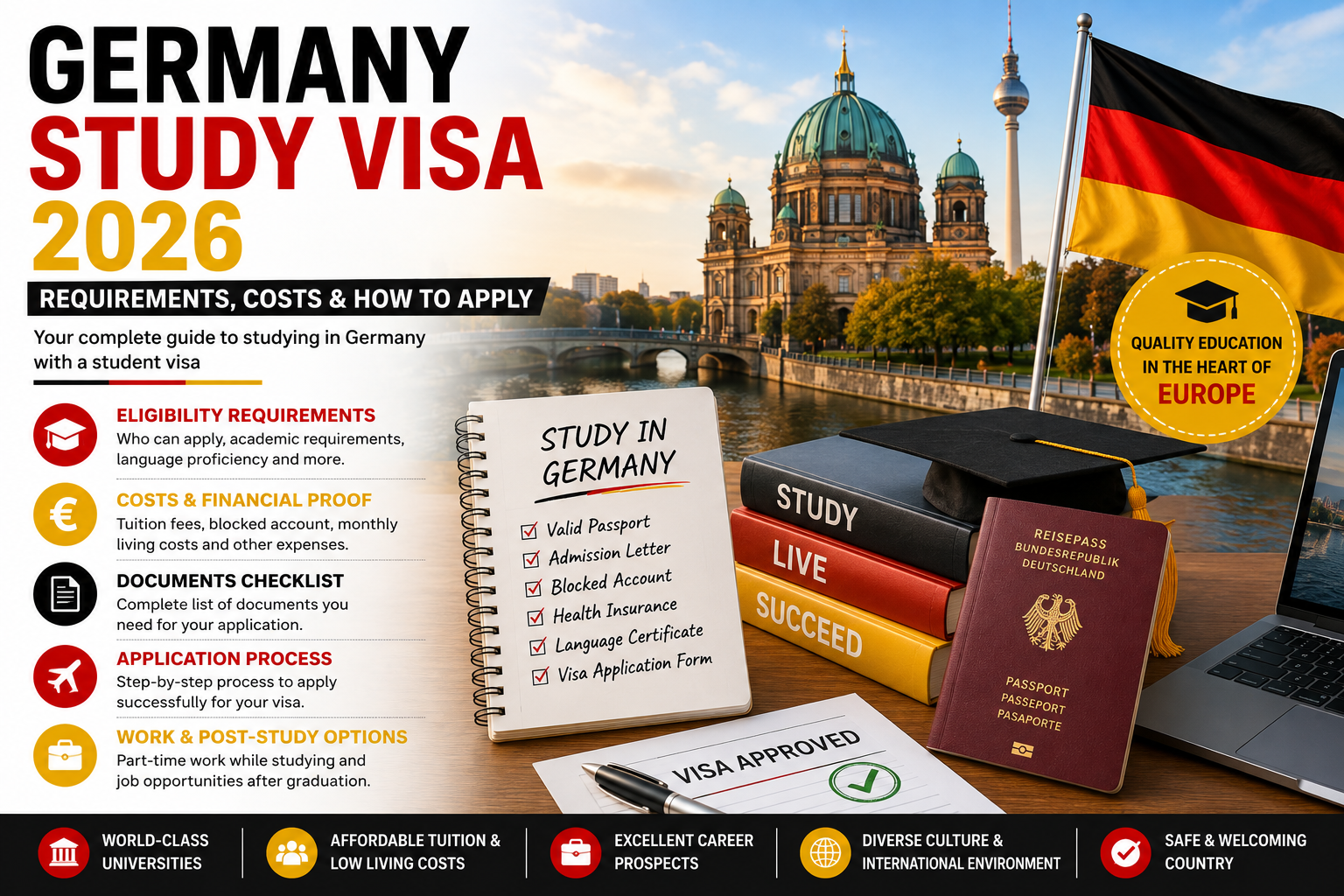
The Germany study visa 2026 is an important route for international students who have been admitted to a recognised German university and need immigration permission to study in the country.
Germany attracts students from around the world, but receiving university admission does not automatically mean your student visa will be approved. You must also meet financial, immigration and, where applicable, language requirements.
This guide explains the main requirements, the €11,904 financial requirement for 2026, visa costs, documents, application process and the work opportunities available to international students.
Who Needs a Germany Study Visa in 2026?
Whether you need a visa depends largely on your nationality. EU and EEA nationals generally do not need a visa to study in Germany.
Many non-EU nationals must obtain the appropriate visa before travelling to Germany for long-term study. However, nationals of certain countries, including the United Kingdom, Australia, Canada, Japan, New Zealand, South Korea and the United States, can generally enter Germany without obtaining a student visa beforehand and apply for the required residence permit after arrival.
You should check the Federal Foreign Office visa requirements by nationality before making travel arrangements.
Germany Study Visa 2026 Requirements
One of the most important requirements is admission to a state-recognised higher education institution in Germany.
According to the official Make it in Germany student visa guidance, applicants generally need to demonstrate that:
- They have been admitted to a state-recognised higher education institution.
- They can financially support themselves during their studies.
- They meet any language requirements applying to their course.
- They have the documents required by the responsible German mission.
Some courses require proof of language proficiency, commonly around B2 level under the Common European Framework of Reference for Languages. The actual requirement depends on your programme and institution.
How Much Money Do You Need for a Germany Student Visa?
Financial evidence is one of the most important parts of a German student visa application.
For 2026, students using their own funds must generally demonstrate at least €11,904 for one year. This is equivalent to €992 per month.
A blocked account, known in Germany as a Sperrkonto, is one common method of demonstrating these funds. The account limits how much money can normally be withdrawn each month so that sufficient funds remain available throughout the year.
However, a blocked account is not the only possible method. Depending on your circumstances, financial support may also be demonstrated through an eligible scholarship or a formal declaration of commitment from someone who can financially support you.
Read the Federal Foreign Office guidance on blocked accounts before choosing a provider.
How Much Does a Germany Study Visa Cost?
The standard fee for a German national visa for a long-term stay is currently €75 for an adult applicant. The standard national visa fee for minors is €37.50.
Fee exemptions or reductions can apply in particular circumstances.
The visa fee is separate from your €11,904 financial evidence. You should also budget for other possible costs, including health insurance, document translations, qualification assessments, travel and any fees charged by a blocked-account provider.
Visa fees can change, so confirm the latest amount through the German Federal Foreign Office visa information before applying.
Documents Needed for a Germany Student Visa
The precise checklist can vary depending on your nationality, university, course and the German mission handling your application.
Commonly requested documents can include:
- A valid passport.
- A completed visa application.
- Proof of admission to a recognised German university.
- Proof of sufficient financial resources.
- Evidence of health insurance.
- Academic certificates and qualifications.
- Proof of language proficiency where required.
- Passport photographs that meet the required specifications.
The German embassy or consulate responsible for your place of residence may request additional documents. Always use its current checklist rather than relying entirely on a general list found online.
How to Apply for a Germany Study Visa in 2026
Germany has expanded its digital visa system. Applications for studying can generally be started online through the Federal Foreign Office’s Consular Services Portal.
A practical process is:
- Secure university admission: Apply to an eligible German higher education institution and receive confirmation of admission.
- Check your visa requirement: Determine whether you need to obtain a visa before entering Germany.
- Arrange your finances: Prepare the required financial evidence, such as a blocked account, eligible scholarship or declaration of commitment.
- Prepare your documents: Gather your passport, university admission evidence, financial documents and other required paperwork.
- Submit your application: Use the appropriate German mission or the online Consular Services Portal where available.
- Attend the required appointment: You may need to provide biometric information, show original documents and pay the applicable fee.
- Wait for a decision: Do not make non-refundable travel arrangements based on an assumption that your visa will be approved.
How Long Does a Germany Student Visa Take?
There is no guaranteed universal processing time for every student visa application.
The Federal Foreign Office warns that student visa applications may take several weeks and, in individual cases, several months because approval from the relevant foreigners authority in Germany may be required.
Applying with complete documentation can help prevent avoidable delays. Students should therefore begin their preparations well before their intended course start date.
Can International Students Work in Germany?
Yes. International students holding the appropriate residence permission can generally work while studying.
Current rules allow international students to work for up to 140 full days or 280 half days per year. Alternatively, students can generally work for up to 20 hours per week.
Certain student jobs connected to the university may be treated differently. Always check the conditions attached to your residence permit before accepting employment.
Part-time work can help with everyday expenses, but you should not rely on finding a job after arrival as a replacement for the financial evidence required for your visa.
What Happens After You Graduate?
Germany provides options for international graduates who want to remain in the country and look for qualified employment.
After successfully completing a German degree, eligible graduates can apply for a residence permit allowing them to search for qualified employment for up to 18 months.
During this period, graduates can look for employment related to their qualifications. Once suitable qualified employment is secured, they may be able to switch to an appropriate employment residence permit, subject to meeting the applicable requirements.
This is not automatic permanent residence. Different conditions apply to long-term residence and settlement in Germany.
Do German Universities Charge Tuition Fees?
Germany is known for comparatively low study costs at many public universities, but it is incorrect to assume that every international student can study completely free of charge.
Students can face semester contributions and other university charges. Tuition policies can also differ by federal state, university, course and nationality. Some specialised or private programmes charge substantial tuition fees.
Check the official fee information provided by the particular university before accepting an offer.
Common Germany Student Visa Mistakes
One common mistake is confusing university admission with visa approval. Admission only satisfies part of the immigration requirements.
Applicants should also avoid providing incomplete financial evidence, using unreliable blocked-account providers, submitting documents that do not match their application, or leaving the visa process until shortly before their course begins.
Be cautious of anyone promising guaranteed admission or guaranteed visa approval in return for money. A private agent cannot guarantee the decision of a German university, embassy or immigration authority.
Final Thoughts on the Germany Study Visa 2026
The Germany study visa 2026 can provide international students with access to recognised German universities and the opportunity to gain valuable international education and experience.
The most important steps are securing genuine university admission, checking whether you need a visa, preparing the correct financial evidence and submitting complete documents. For students relying on a blocked account, the official 2026 financial requirement is currently €11,904 for a year of study.
Start preparing early and verify requirements directly with your university and the German authorities responsible for your application.
Disclaimer: German visa rules, financial requirements, fees and immigration policies can change. This article provides general information and is not legal or immigration advice. Always confirm current requirements through the German Federal Foreign Office, Make it in Germany and the German mission responsible for your application.