Canada Work Permit 2026: How to Apply
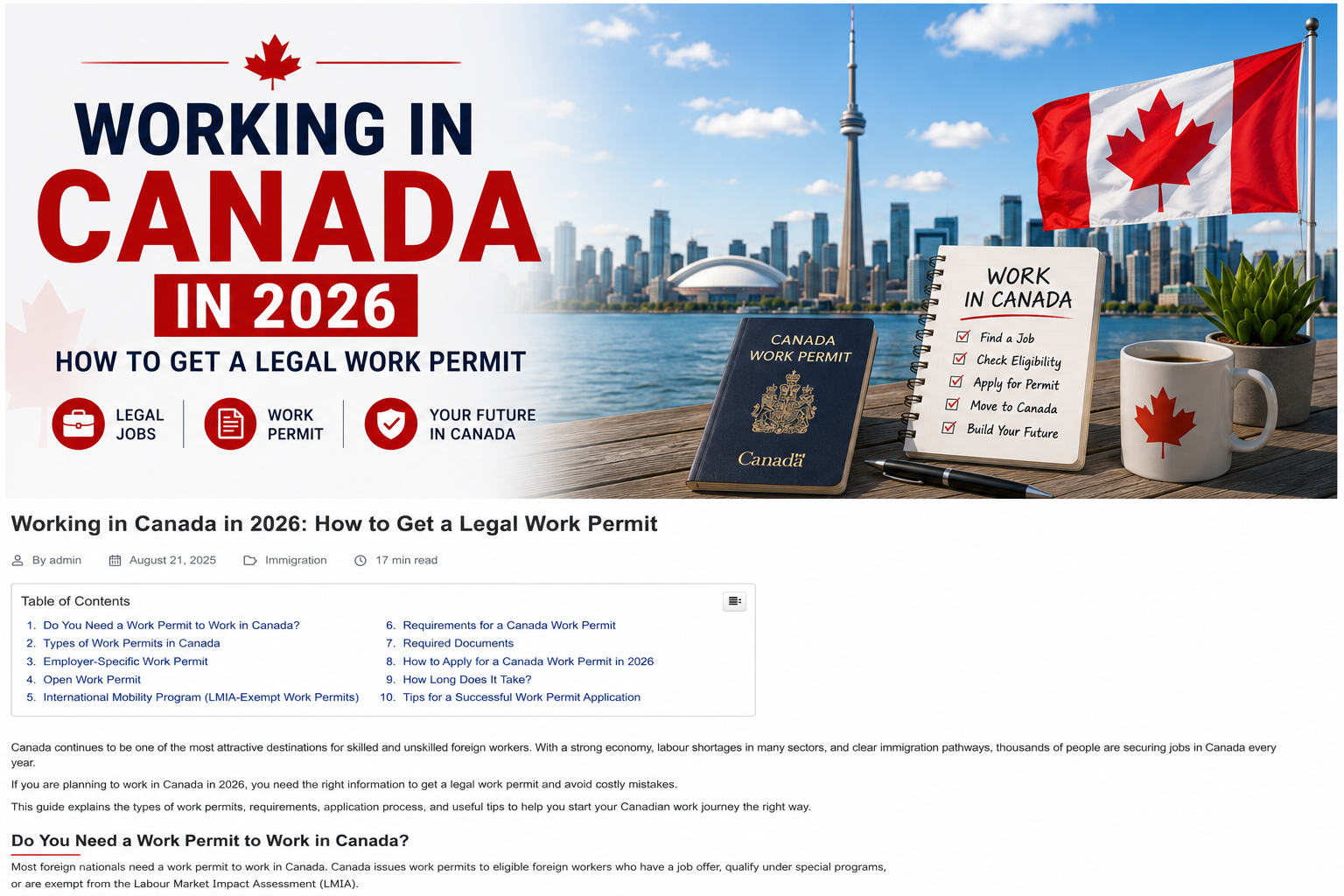
A Canada work permit 2026 can allow an eligible foreign national to work legally in Canada for a limited period. However, there is no single work permit available to everyone. The route you need depends on your job, employer and personal circumstances.
Canada mainly issues employer-specific and open work permits. Most foreign nationals need a work permit, although limited exemptions exist. In many employer-specific cases, the Canadian employer must also obtain a Labour Market Impact Assessment, commonly called an LMIA.
This guide explains the main work permit options, LMIA requirements, current fees, documents and practical steps to follow when applying in 2026.
What Is a Canada Work Permit?
A Canadian work permit is temporary immigration authorisation that allows a foreign national to work in Canada subject to specified conditions.
A work permit is not the same as permanent residence. Having permission to work in Canada does not automatically give you permanent resident status.
According to Immigration, Refugees and Citizenship Canada’s work permit guidance, Canada has two main types of work permits: employer-specific work permits and open work permits.
Canada Work Permit 2026: The Two Main Types
Employer-Specific Work Permit
An employer-specific work permit allows you to work according to the conditions stated on your permit. These can include the employer you can work for, how long you can work and, where applicable, the location where you can work.
You normally need the employer-side immigration process to be completed before applying.
For many positions, this involves a positive LMIA. For an LMIA-exempt position, the employer may instead need to submit an offer of employment through Canada’s Employer Portal and provide you with an offer of employment number.
Open Work Permit
An open work permit gives an eligible person more flexibility because it is not generally restricted to one specific employer. However, it does not mean anyone can simply apply for one.
Open work permits are available only in particular situations. Examples can include certain eligible spouses or partners, some permanent residence applicants, qualifying international graduates and International Experience Canada participants.
You should check the official open work permit eligibility rules to determine whether you qualify.
What Is an LMIA?
A Labour Market Impact Assessment is an assessment obtained by a Canadian employer when required before hiring a temporary foreign worker.
A positive LMIA generally confirms that hiring the foreign worker is expected to have a positive or neutral effect on Canada’s labour market.
The employer applies for the LMIA, not the foreign worker. The employer may need to demonstrate efforts to recruit Canadian citizens or permanent residents before receiving approval.
After receiving a positive LMIA, the employer provides the required LMIA information to the worker so that the worker can proceed with an employer-specific work permit application.
Does Every Canadian Job Need an LMIA?
No. Some employment is exempt from the LMIA requirement through Canada’s International Mobility Program and other immigration provisions.
LMIA exemptions can apply in situations involving certain international agreements, eligible French-speaking workers outside Quebec, qualifying intra-company transferees and other categories.
Whether an exemption applies depends on the specific worker and employment situation. Do not assume that a vacancy is LMIA-exempt simply because an advertisement mentions visa sponsorship.
How to Find Jobs That May Support a Work Permit
If you require an employer-specific permit, finding a genuine employer is normally one of the first major steps.
Canada’s official Job Bank provides a dedicated section for foreign candidates. When searching, pay attention to vacancies that employers have identified as being open to international candidates.
You can search through the Government of Canada Job Bank for foreign candidates and through the official career pages of Canadian employers.
Do not assume every vacancy advertised in Canada is available to overseas applicants. Many employers require candidates who already have legal authorisation to work in Canada.
Requirements for a Canada Work Permit in 2026
The exact eligibility requirements depend on the type of permit and where you apply. Applicants generally need to satisfy an immigration officer that they meet the conditions for temporary entry.
You may need to demonstrate that you:
- Have a genuine qualifying job offer where one is required.
- Have the skills, qualifications or experience required for the position.
- Have enough money to support yourself and accompanying family members.
- Will leave Canada when your authorised stay ends unless you obtain another lawful status.
- Have no relevant criminal or security inadmissibility issues.
- Meet applicable health requirements.
- Will not work for an employer that is ineligible under Canada’s immigration rules.
Additional requirements can apply depending on your occupation and country of residence.
Documents You May Need
IRCC provides a personalised document checklist during the application process. Documents can vary considerably between applicants.
Depending on your circumstances, you may need:
- A valid passport or travel document.
- A written job offer or employment contract.
- A positive LMIA and related information where required.
- An offer of employment number for an eligible LMIA-exempt job.
- Evidence of your qualifications and work experience.
- Marriage and family documents if family members are included.
- A medical examination where required.
- Police or other supporting documents if requested.
- Biometrics where applicable.
Applicants applying from outside Canada should check the official work permit document requirements before submitting their application.
How Much Is a Canada Work Permit in 2026?
As of August 2026, the standard work permit processing fee is CAD $155 per person.
If you are applying for an open work permit, you generally pay an additional CAD $100 open work permit holder fee, making the usual government permit fees CAD $255 before any applicable biometrics charge.
Biometrics currently cost CAD $85 for an individual where required. Other expenses can include medical examinations, police certificates, document translations and professional licensing.
Fees can change, so confirm the amount through IRCC before paying.
How to Apply for a Canada Work Permit in 2026
The exact process depends on the work permit category, but an overseas applicant requiring an employer-specific permit will generally follow these steps:
- Find a genuine job: Apply for Canadian vacancies that match your actual qualifications and experience.
- Confirm the immigration route: Your employer determines whether the job requires an LMIA or qualifies for an exemption.
- Employer completes its requirements: Where necessary, the employer obtains a positive LMIA or completes the LMIA-exempt employer process.
- Gather your documents: Prepare your passport, employment documents, qualifications and other required evidence.
- Apply online: Complete the appropriate application through the official IRCC system and pay the required fees.
- Complete additional requirements: Provide biometrics or undergo a medical examination if required.
- Wait for the decision: IRCC assesses your application and may request additional documents.
Processing times vary according to the type of application, country and individual circumstances. Avoid anyone promising a guaranteed approval date.
Can Your Spouse Work in Canada?
Some spouses or common-law partners of foreign workers can qualify for an open work permit, but Canada’s family open work permit rules have become more restrictive.
Eligibility depends on factors including the principal worker’s occupation, immigration programme and remaining work authorisation.
Do not assume your spouse automatically qualifies simply because you receive a Canadian work permit. Check the current family open work permit requirements before making plans.
Your Rights as a Foreign Worker in Canada
Temporary foreign workers have workplace rights in Canada. Employers must comply with applicable employment standards and the conditions of the immigration programme used to hire the worker.
Your employer cannot take your passport or work permit from you. Employers are also prohibited from making workers reimburse certain recruitment-related fees.
If you are hired through the Temporary Foreign Worker Program, read the Government of Canada guidance on temporary foreign worker rights before travelling.
Important Canada Work Permit Changes in 2026
Canada continues to adjust temporary foreign worker policies in response to labour market conditions.
For example, temporary measures running from 1 April 2026 to 31 March 2027 can support eligible rural employers in participating provinces and territories seeking workers for certain low-wage positions.
The government has also strengthened compliance measures within the Temporary Foreign Worker Program. This makes it particularly important for both workers and employers to follow current rules rather than relying on outdated immigration information.
Avoid Fake Canada Work Permits and Job Offers
Foreign job seekers are frequent targets for employment and immigration scams.
Warning signs include:
- Guaranteed Canadian work permits.
- Guaranteed LMIA approval.
- Requests to pay an employer for a job offer.
- Large unexplained recruitment charges.
- Employers that cannot be independently verified.
- Requests to provide false work experience or qualifications.
- Promises of guaranteed Canadian permanent residence.
An LMIA is an employer application. Be extremely cautious if someone claims you can simply purchase an approved LMIA and automatically receive a work permit.
Does a Canada Work Permit Lead to Permanent Residence?
A work permit itself does not give you Canadian permanent residence.
However, some workers may later become eligible for separate permanent residence programmes based on factors such as Canadian work experience, occupation, language ability, education and provincial nomination.
Possible pathways can include Express Entry programmes, Provincial Nominee Programs and regional immigration programmes, depending on eligibility.
Never accept a temporary job solely because someone promises that it will automatically produce permanent residence.
Final Thoughts on the Canada Work Permit 2026
A Canada work permit 2026 can provide a legal route for eligible foreign nationals to work in Canada, but applicants need to understand which type of permit applies to them.
If you require an employer-specific permit, concentrate on finding genuine employers willing and legally able to hire foreign workers. Confirm whether an LMIA is required, prepare accurate documents and submit your application through the official Canadian immigration system.
For open work permits, check that you genuinely belong to an eligible category before applying. No recruiter or immigration agent can guarantee that Canada will approve your application.
Disclaimer: Canadian work permit rules, fees, LMIA requirements and immigration policies can change. This article provides general information and is not immigration or legal advice. Always confirm current requirements through Immigration, Refugees and Citizenship Canada and Employment and Social Development Canada before applying.