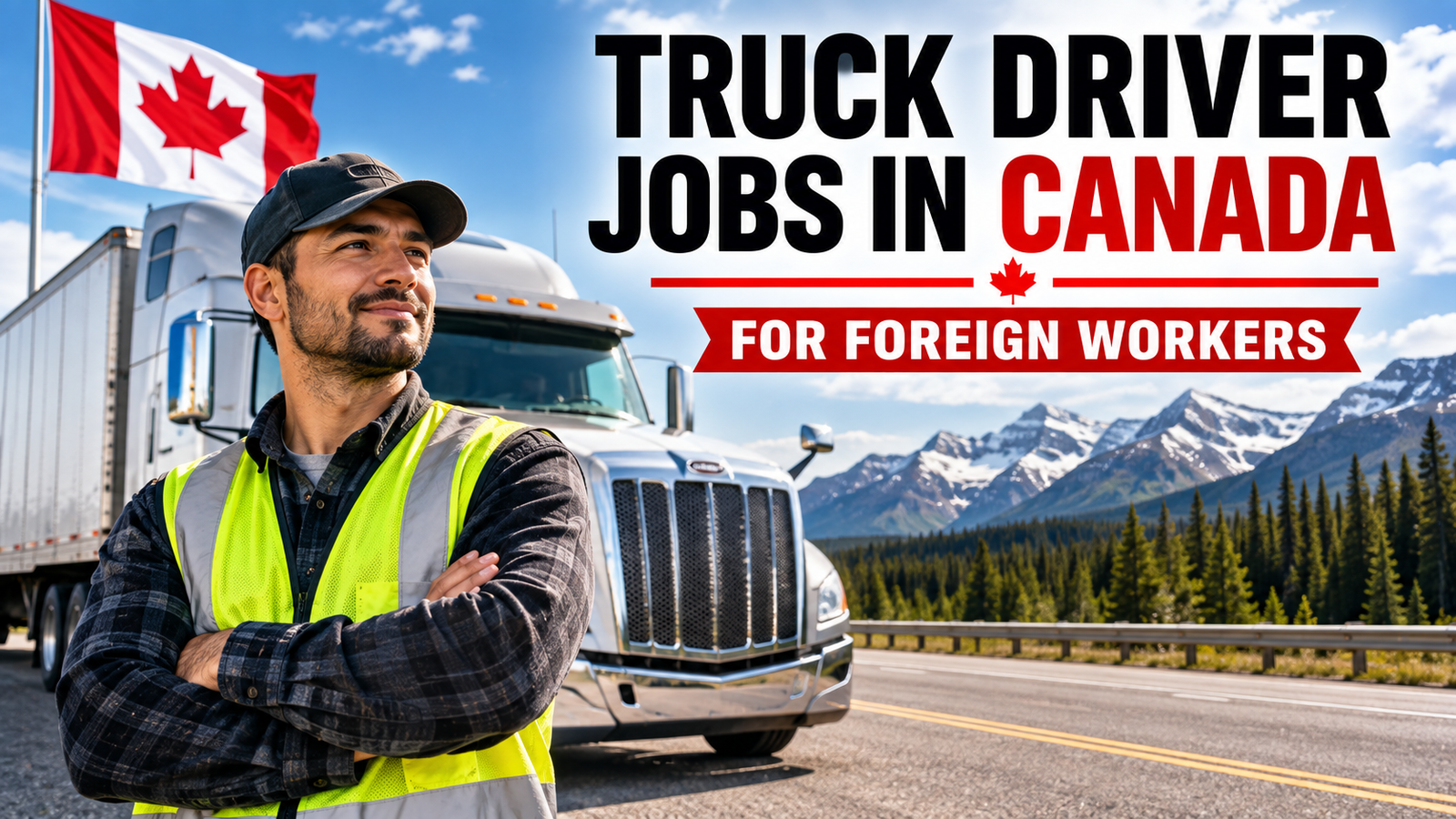
Truck Driver Jobs in Canada for Foreign Workers
Truck driver jobs in Canada attract considerable interest from foreign workers because road transportation is an important part of the Canadian economy. Transport truck drivers move goods between cities, provinces, distribution centres and international borders.
Foreign workers can potentially work as truck drivers in Canada, but finding a vacancy does not automatically give you permission to work in the country. You need to meet both Canadian immigration requirements and the commercial driving licence requirements of the province or territory where you intend to work.
Understanding these two separate requirements is essential before applying for jobs or paying anyone who claims they can arrange a Canadian truck driving visa.
Can Foreign Workers Get Truck Driver Jobs in Canada?
Yes. Canadian employers can hire eligible foreign nationals for transport truck driver positions when the appropriate immigration requirements are satisfied.
One common route involves an employer obtaining a Labour Market Impact Assessment, commonly known as an LMIA, before the foreign worker applies for an employer-specific work permit.
However, not every truck driving vacancy comes with LMIA support, and an employer is not required to hire somebody simply because they are interested in immigrating to Canada.
Applicants should therefore concentrate on genuine vacancies where the employer is willing and legally able to hire foreign workers.
What Does a Transport Truck Driver Do?
Transport truck drivers operate heavy vehicles to move goods over local, regional, provincial and international routes.
Depending on the position, responsibilities can include:
- Operating straight trucks or tractor-trailers.
- Planning routes and delivery schedules.
- Conducting vehicle inspections.
- Securing cargo correctly.
- Completing trip and delivery documentation.
- Monitoring fuel consumption and vehicle condition.
- Following road safety regulations.
- Communicating with dispatchers and customers.
- Completing long-distance journeys where required.
Some positions involve long-haul driving across several provinces, while others focus on regional or local deliveries.
What Is the NOC Code for Truck Drivers?
Transport truck drivers are classified under Canada’s National Occupational Classification as NOC 73300.
The occupation is classified at TEER 3.
This classification is important because Canadian immigration programmes use NOC codes and TEER categories to determine whether work experience qualifies for particular pathways.
Your actual job duties should correspond with the occupation rather than relying only on the job title shown on your employment contract.
How Much Do Truck Drivers Earn in Canada?
Truck driver wages vary considerably across Canada.
Pay can depend on the province, experience, type of vehicle, routes, employer and whether the driver works locally or long distance.
According to Canada’s Job Bank, transport truck drivers currently have a national median wage of approximately CAD $26.42 per hour.
Actual wages can be lower or significantly higher depending on the location and position.
When researching a vacancy, use the official Job Bank wage information for the province where the employer is located rather than assuming that one national salary applies everywhere.
Which Provinces Have Truck Driving Opportunities?
Transport and logistics operate throughout Canada, but employment conditions and demand differ between provinces.
Truck driving opportunities can be found in provinces including:
- Alberta.
- Ontario.
- British Columbia.
- Saskatchewan.
- Manitoba.
- New Brunswick.
- Nova Scotia.
Large provinces with significant logistics, agriculture, manufacturing, energy and construction industries depend heavily on road transportation.
However, you should check current labour market information before choosing a province because job availability can change.
Do You Need a Canadian Driving Licence?
Yes. Immigration permission and permission to drive a commercial vehicle are separate matters.
Commercial driver licensing in Canada is generally regulated by individual provinces and territories.
The licence required depends on the vehicle you will operate and where you will work.
For example, tractor-trailer drivers may need the appropriate commercial licence for their province, together with additional endorsements where applicable.
An overseas driving licence does not automatically allow you to begin professional truck driving throughout Canada.
Can You Convert a Foreign Truck Driving Licence?
This depends on the province and the country where your existing licence was issued.
Some provinces have reciprocal licence arrangements with certain jurisdictions. In other cases, a foreign driver may need to complete knowledge tests, medical requirements, training or road tests before obtaining the appropriate Canadian commercial licence.
For commercial truck driving, additional mandatory training requirements can also apply.
Check the official driving authority of the province where you intend to work before assuming your foreign licence can simply be exchanged.
What Is Mandatory Entry-Level Training?
Several Canadian provinces require Mandatory Entry-Level Training, commonly called MELT, for people seeking certain commercial truck driving licences.
The training normally covers areas such as:
- Vehicle operation.
- Safe driving techniques.
- Vehicle inspections.
- Air brake systems.
- Professional driving responsibilities.
- Road safety.
The exact requirements differ between provinces.
This is another reason foreign applicants should research provincial licensing before accepting a job offer.
Do Canadian Trucking Companies Sponsor Foreign Workers?
Some Canadian trucking companies recruit foreign workers when they cannot find enough suitable workers locally.
Where an LMIA is required, the employer generally needs to demonstrate that it has followed the applicable recruitment requirements before hiring the foreign worker.
A positive LMIA confirms that hiring the foreign worker is expected to have a positive or neutral impact on Canada’s labour market.
The employer can then provide the worker with the documents needed for the appropriate work permit application.
What Is an LMIA?
A Labour Market Impact Assessment is a process administered by Employment and Social Development Canada.
Many employers need a positive LMIA before hiring a temporary foreign worker.
The employer, not the foreign worker, applies for the LMIA.
This distinction is particularly important because fraudulent recruiters sometimes tell applicants they must personally purchase an LMIA.
You should be cautious if somebody asks you to pay them for a guaranteed positive LMIA or claims that an LMIA can simply be bought.
How Does the Work Permit Process Work?
Where an LMIA is required, a typical process may look like this:
- Find a genuine job: Apply for transport truck driver vacancies with Canadian employers.
- Receive an employment offer: The employer decides to hire you.
- Employer completes the LMIA process: Where required, the employer applies to Service Canada.
- Receive the necessary employment documents: A successful employer provides the documents required for your work permit application.
- Apply for a work permit: Submit your application to Immigration, Refugees and Citizenship Canada.
- Complete additional requirements: Biometrics, medical examinations or police documents may be required depending on your circumstances.
- Receive a decision: Do not travel to work in Canada until you have the appropriate authorisation.
Where Can Foreign Workers Find Truck Driver Jobs?
Canada’s official Job Bank is one of the most useful places to begin researching legitimate employment opportunities.
When searching, use terms such as:
- Transport truck driver.
- Long-haul truck driver.
- Tractor-trailer driver.
- Truck driver.
- Commercial driver.
Read the vacancy carefully before applying.
Some Job Bank listings specifically state whether applications are accepted from candidates outside Canada. Others may only consider people who are already legally authorised to work in Canada.
How to Apply for Truck Driver Jobs From Outside Canada
If you are overseas, your application should demonstrate that you already have relevant professional driving experience.
A practical approach is:
- Prepare a Canadian-style CV.
- Clearly state your commercial driving experience.
- Include the types of vehicles you have operated.
- Explain your long-haul or regional driving experience.
- Include relevant safety and professional training.
- Search for employers genuinely recruiting internationally.
- Apply directly through the employer’s official careers page where possible.
- Verify the company before providing sensitive documents.
Do not send the same generic CV to hundreds of companies. Tailor your application to the position being advertised.
Can Truck Driving Lead to Canadian Permanent Residence?
Potentially, yes, but a truck driving job does not automatically provide permanent residence.
Because transport truck drivers are classified as TEER 3, qualifying Canadian work experience may potentially be relevant to certain economic immigration programmes.
Possible pathways can include Express Entry programmes where the applicant satisfies all requirements and certain Provincial Nominee Programs.
Provincial programmes vary significantly, and some provinces operate streams designed around local labour market requirements.
Your age, education, language ability, work experience and province can all affect which permanent residence pathway may be available.
Do You Need IELTS to Work as a Truck Driver?
The language requirement depends on the immigration programme or work permit process involved.
An employer may also require sufficient English or French ability to perform the job safely.
Truck drivers need to understand road signs, safety procedures, dispatch instructions and transport documentation.
If you later apply for permanent residence, you may need an approved language test such as IELTS General Training, CELPIP-General, PTE Core, TEF Canada or TCF Canada, depending on the immigration programme.
Can Your Family Come to Canada?
Whether your spouse or children can accompany you depends on your immigration status and the rules in force when they apply.
Canada has changed eligibility for family open work permits in recent years, so you should not assume that receiving a truck driving work permit automatically gives your spouse an open work permit.
Check the current family member requirements directly with Immigration, Refugees and Citizenship Canada before making plans.
Watch Out for Fake Truck Driver Job Offers
Truck driving is frequently advertised online as an easy route into Canada, making it attractive to scammers.
Be cautious if someone promises:
- A guaranteed Canadian truck driving visa.
- A guaranteed LMIA.
- A job without an interview or proper recruitment process.
- Permanent residence immediately after arrival.
- A commercial driving licence without training or testing.
- An unusually high salary with little or no experience.
You should also be suspicious if a recruiter asks you to transfer large amounts of money into a personal account for an LMIA.
Frequently Asked Questions
Can foreigners work as truck drivers in Canada?
Yes. Foreign nationals can potentially work as transport truck drivers if they obtain the required immigration permission, meet the employer’s requirements and obtain the appropriate provincial commercial driving licence.
What is the NOC code for truck drivers?
Transport truck drivers are classified under NOC 73300, TEER 3.
Do I need experience?
Employers commonly look for relevant driving experience, and provincial licensing requirements may also affect your ability to begin work. The requirements vary by employer and province.
Can a Canadian trucking company provide an LMIA?
An eligible employer can apply for an LMIA where required. Approval is determined by Service Canada and cannot be guaranteed.
Can truck driving lead to permanent residence?
Potentially. Qualifying workers may later become eligible for certain federal or provincial permanent residence pathways, but employment as a truck driver does not automatically grant permanent residence.
Final Thoughts on Truck Driver Jobs in Canada
Truck driver jobs in Canada can offer opportunities for experienced foreign drivers, particularly those who understand both the immigration process and Canada’s provincial commercial licensing requirements.
The most important point is that a job offer, work permit and commercial driving licence are separate parts of the process. Receiving one does not automatically guarantee the others.
Start by researching genuine transport truck driver vacancies, checking the licensing requirements in your preferred province and applying directly to legitimate Canadian employers.
Disclaimer: Canadian immigration programmes, LMIA requirements, wages and provincial commercial driving regulations can change. Always confirm current requirements with Immigration, Refugees and Citizenship Canada, Service Canada and the relevant provincial licensing authority before applying or making financial decisions.